
Asian Handicap has become one of the most appealing betting formats for strategic bettors around the world, offering a unique blend of statistical analysis, risk management, and opportunity for consistent returns. Unlike traditional 1X2 betting, which often leaves outcomes binary and heavily influenced by favorites or underdogs, Asian Handicap introduces a nuanced layer that levels the playing field. By assigning a handicap to the stronger team, it mitigates the volatility associated with betting on clear favorites while creating a more balanced and fair market. This structure allows savvy bettors to leverage data and insights more effectively, making calculated decisions rather than relying purely on luck or intuition.
One of the key elements that attracts strategic bettors to Asian Handicap is its ability to reduce the draw outcome’s uncertainty. In traditional betting, draws can significantly impact potential returns, often creating scenarios where neither team’s dominance translates directly into profit. Asian Handicap, by effectively eliminating the draw through the use of fractional or whole goal handicaps, simplifies the decision-making process. Bettors can focus on analyzing the relative strength of teams, form, and match context without worrying about the game ending in a tie that negates their prediction. This reduction in uncertainty aligns well with the principles of disciplined, long-term betting strategies where risk management is crucial.
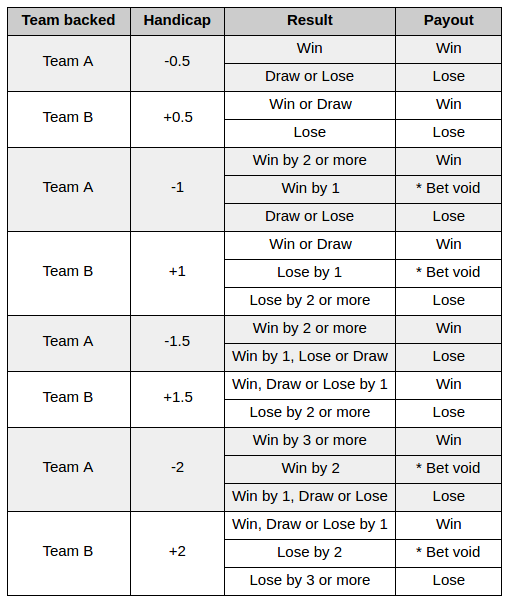
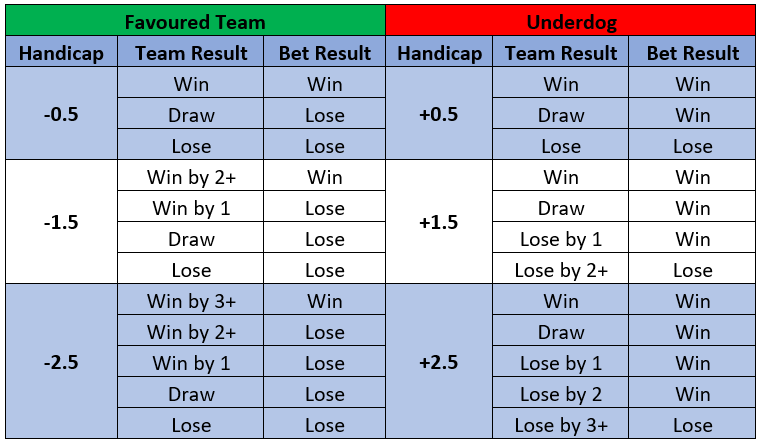
Another major appeal lies in the flexibility of handicaps. Asian Handicap allows for a wide range of handicap values—from full-goal handicaps to half-goal and quarter-goal lines. This flexibility enables bettors to tailor their strategies to specific matches and perceived advantages. For instance, a half-goal handicap prevents a draw, creating a clear win or loss scenario, while a quarter-goal handicap splits the stake between two outcomes, effectively reducing risk and allowing for nuanced profit management. Strategic bettors appreciate this capacity to fine-tune bets according to statistical models, team dynamics, and historical performance data, offering them a way to exploit minor advantages that would otherwise be unavailable in standard betting markets.
Moreover, Asian Handicap encourages the application of analytical and statistical approaches, which appeals to bettors who enjoy research-driven strategies. Unlike simpler bets that may rely on surface-level observations, Asian Handicap requires consideration of multiple variables: goal-scoring trends, defensive strengths, player availability, weather conditions, and head-to-head history. Advanced bettors often employ expected goals (xG) models, performance analytics, and probabilistic frameworks to identify opportunities where the handicap line may not accurately reflect the true balance between teams. This data-driven aspect transforms betting into a game of skill rather than pure chance, appealing to those who enjoy quantifiable decision-making and systematic approaches.
Risk management is another significant reason strategic bettors gravitate toward Asian Handicap. Traditional betting can expose a bettor to high variance, especially when wagering on heavily favored teams. By applying a handicap, the potential payout is often more balanced relative to risk, allowing bettors to engage in higher-stakes wagers without assuming disproportionate exposure. The system also enables partial loss recovery through quarter-goal handicaps, which split outcomes and minimize outright losses. This nuanced approach to risk aligns perfectly with disciplined bankroll management strategies, which are a hallmark of successful long-term betting.
Asian Handicap also enhances value discovery, a principle central to strategic betting. In many cases, the public perception of team strength skews betting lines, creating opportunities for informed bettors. By using handicaps, a strategic bettor can capitalize on these misalignments more effectively. For example, if a popular favorite is slightly overrated by bookmakers, applying a handicap can uncover value that is not evident in conventional odds. This ability to exploit inefficiencies within the market is a critical component of profitable betting and demonstrates why Asian Handicap is often preferred by seasoned strategists.
Furthermore, the format encourages patience and long-term strategy, rather than impulsive wagering. Strategic bettors often analyze multiple matches, weigh probabilities, and distribute stakes according to calculated risk-reward ratios. The Asian Handicap system, with its array of nuanced outcomes and partial returns, rewards those who approach betting with a structured, methodical mindset. It allows for compounding profits gradually, reducing the temptation of high-risk, low-probability bets that can decimate a bankroll. This disciplined approach aligns with professional betting ethics and reinforces the format’s appeal to those focused on sustainability.
Psychologically, Asian Handicap also offers an attractive balance of excitement and control. Bettors can engage with competitive matches while feeling a sense of mitigation against pure randomness. The system allows them to influence their exposure to risk actively, creating a more intellectually satisfying experience. For many, this combination of strategy, analysis, and control makes Asian Handicap more engaging than standard betting markets, which often rely heavily on unpredictable outcomes and luck.
Additionally, the format is versatile across sports, though it is most popular in football. Strategic bettors appreciate that the principles of handicapping—balancing probabilities, mitigating variance, and exploiting market inefficiencies—can be adapted to multiple competitions and leagues. This universality allows for consistent application of methodologies and predictive models, reinforcing the appeal for bettors who operate systematically across different matches, teams, and leagues.
In summary, Asian Handicap appeals to strategic bettors because it offers reduced uncertainty, flexible risk management, data-driven decision-making, and opportunities for value discovery. The structure of handicaps aligns with the principles of disciplined betting, allowing informed bettors to exploit market inefficiencies and manage bankrolls effectively. By transforming betting from a simplistic guesswork exercise into a skill-driven, analytical endeavor, Asian Handicap caters to those who seek long-term profitability and intellectual engagement. Its combination of statistical rigor, strategic flexibility, and psychological satisfaction ensures that it remains one of the most favored formats for those committed to informed, methodical betting strategies.







Leave a Reply